How to configure your own S3 bucket for PDF form submissions
Note: Using Azure Blob Storage? Check out our Azure Blob Storage configuration guide. Using Scaleway Object Storage? Check out our Scaleway Object Storage configuration guide. Using SharePoint? Check out our SharePoint configuration guide.
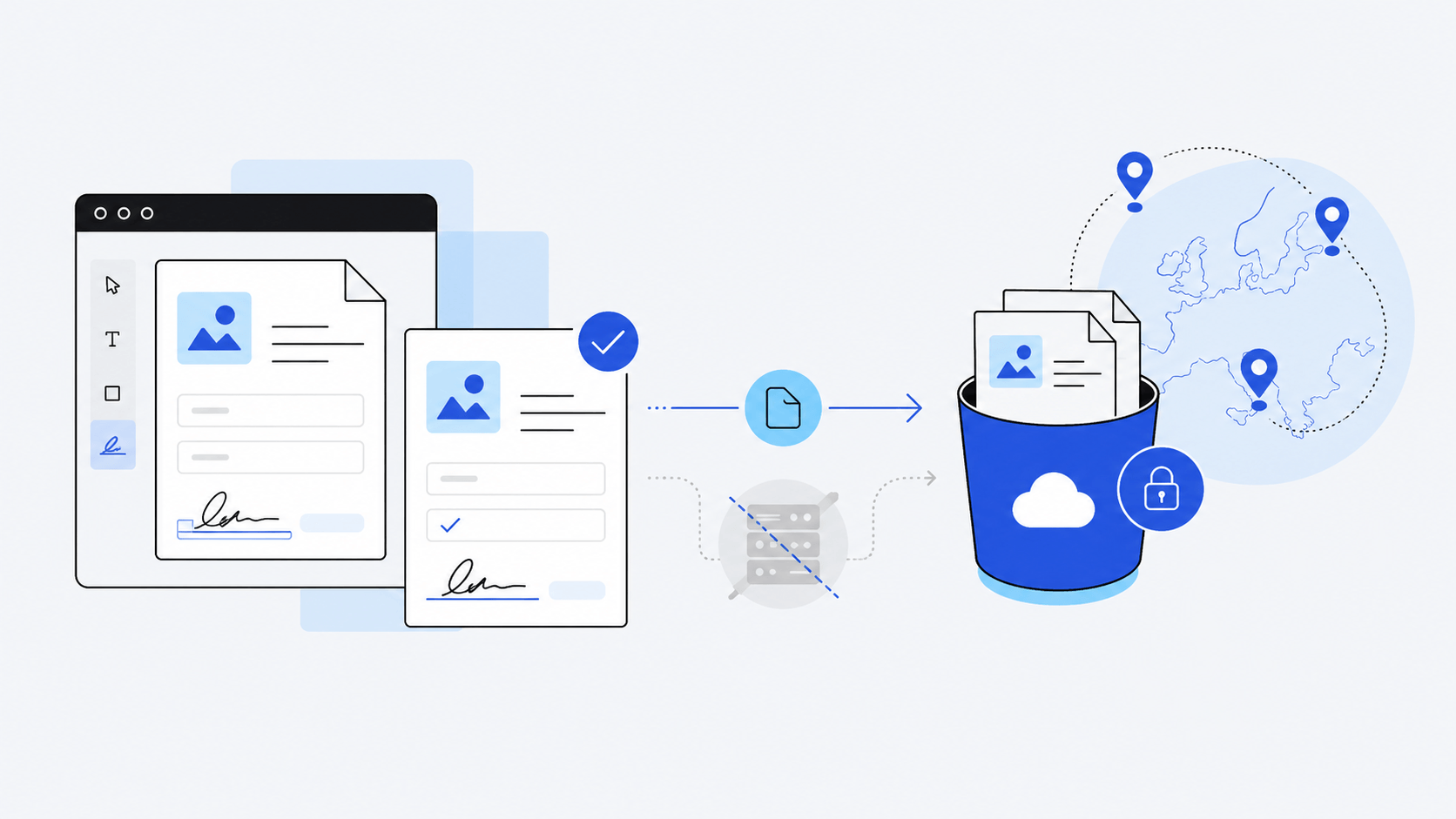
When your customers edit and fill a document using SimplePDF in your portal or the embed editor connected to your portal, the document as well as the submissions are securely saved on SimplePDF storage (S3 bucket).
However for various reasons, such as compliance to specific rules in your country or industry, you may wish this document to be saved in your own storage.
How the upload works
Feel free to jump to the next section to see how to configure your S3 bucket
Let's quickly review the flow of the upload. This applies to all storage providers (S3, Azure Blob Storage, and SharePoint):
  ( User Device )        ( SimplePDF )          ( Cloud Storage )        ( Customer Server )
┌─────────────┐        ┌─────────────┐        ┌─────────────────┐       ┌──────────────────┐
│             │        │             │        │                 │       │                  │
│   Browser   │        │  SimplePDF  │        │ Customer Storage│       │ Customer Backend │
│  (Editor)   │        │   Server    │        │ S3/Azure/SharePt│       │   (webhook)      │
│             │        │             │        │                 │       │                  │
└──────┬──────┘        └──────┬──────┘        └────────┬────────┘       └────────┬─────────┘
     │                      │                        │                         │
     │  1. Request URL      │                        │                         │
     │ ───────────────────> │                        │                         │
     │                      │                        │                         │
     │  2. URL / session    │                        │                         │
     │ <─────────────────── │                        │                         │
     │                      │                        │                         │
     │  3. Direct upload (no data touches SimplePDF) │                         │
     │ ────────────────────────────────────────────> │                         │
     │                      │                        │                         │
     │  4. Upload confirmed │                        │                         │
     │ ───────────────────> │                        │                         │
     │                      │                        │                         │
     │                      │  5. Webhook (optional) │                         │
     │                      │ ─────────────────────────────────────────────── >│
     │                      │                        │                         │

───────────>  API call (metadata only, no document data)
────────────────────────────────────>  Direct file transfer (bypasses SimplePDF)
As security and privacy is paramount to us, we want to emphasize a couple of things about the upload flow:
- The SimplePDF server never sees the document: the upload (step 3) goes directly from the browser to your storage.
- Upload and download URLs are short-lived and pre-signed using your own storage credentials.
How to configure your own S3 bucket
Configuring your own S3 bucket is available with the PRO plan
In SimplePDF
- Log in to your account
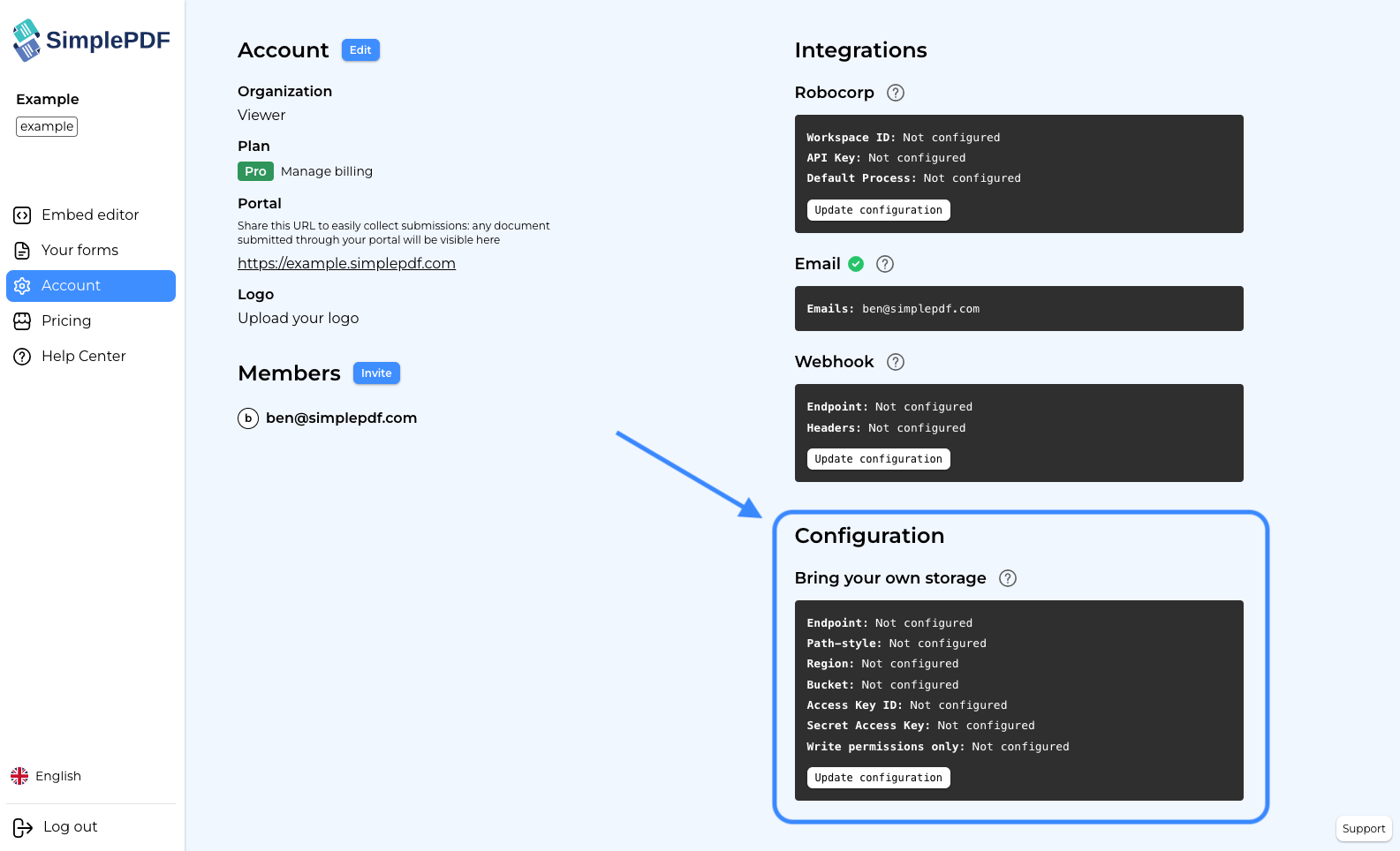
- Navigate to the account settings view:
-
Click
Update configuration -
Enter your S3 bucket details:
Specify https://s3.amazonaws.com for the endpoint if you use Virtual-hosted-style requests
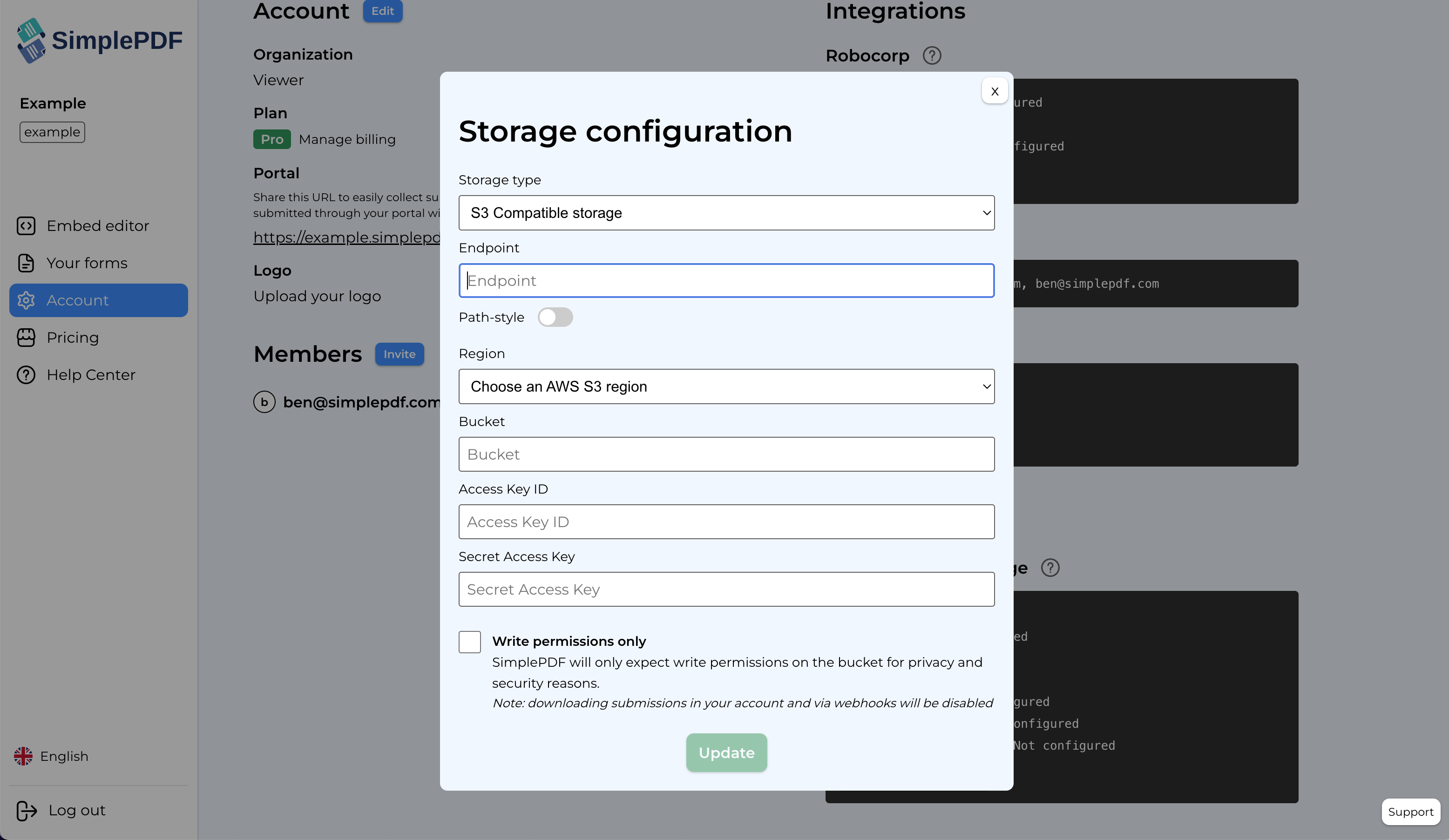
- Click
Update
CORS configuration in your S3 bucket
- Allow the following headers:
x-amz-aclContent-Type
- Allow the following methods:
GETPUTPOST
- Allow the following origin:
*
You can narrow it down to your own company portal if you do not want to grant access to all origins (*): https://your_identifier.simplepdf.com.
Permissions required on your S3 bucket
s3:GetObject: to display the documents and submissions in the interface and when sending webhookss3:PutObject: to upload the documents and submissionss3:DeleteObject: to delete the uploaded documents and submissions
That's it! Your documents and submissions are now automatically stored in your own S3 bucket!
If you have any questions, feel free to reach out to support@simplepdf.com